Astronaut's Amulet: A Locket for Memory in Microgravity

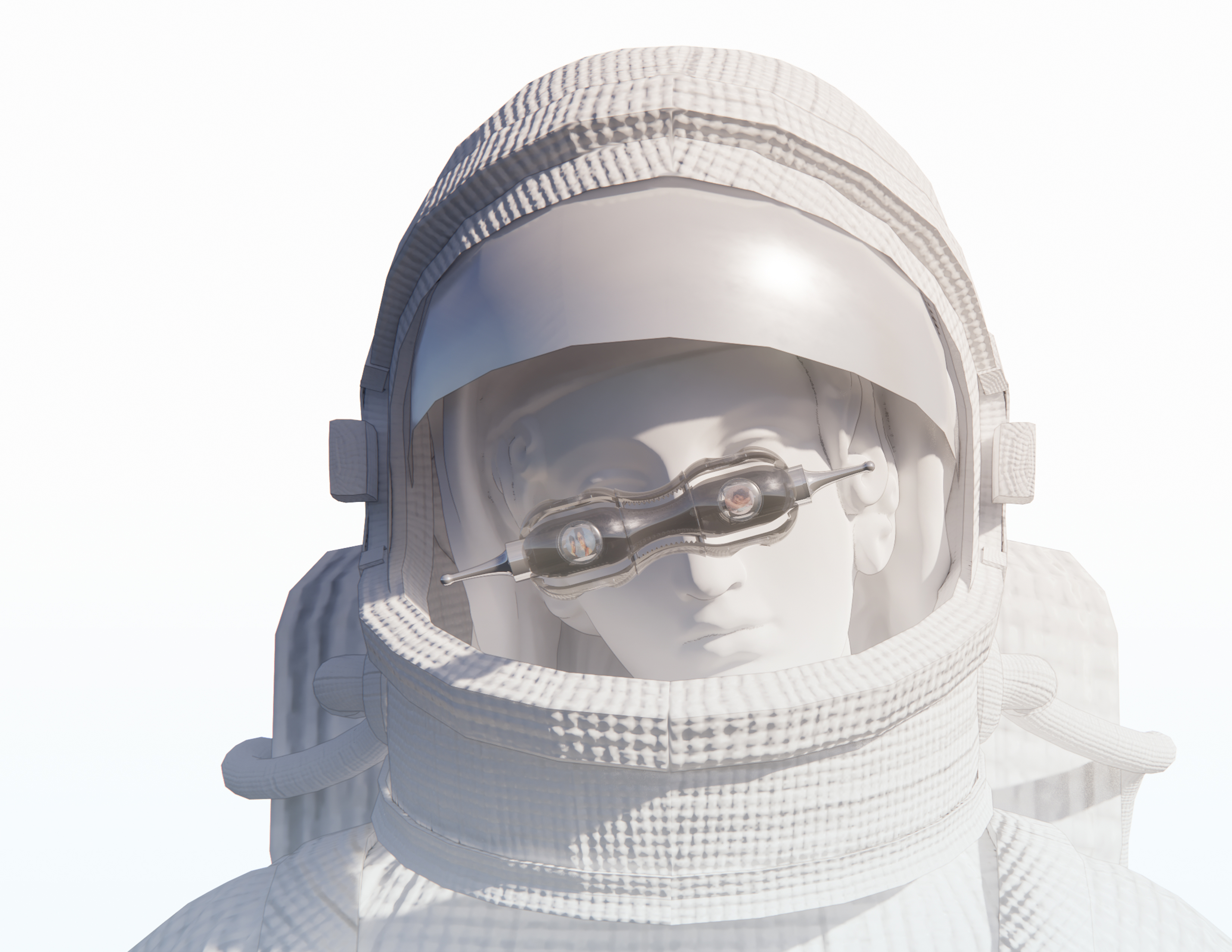
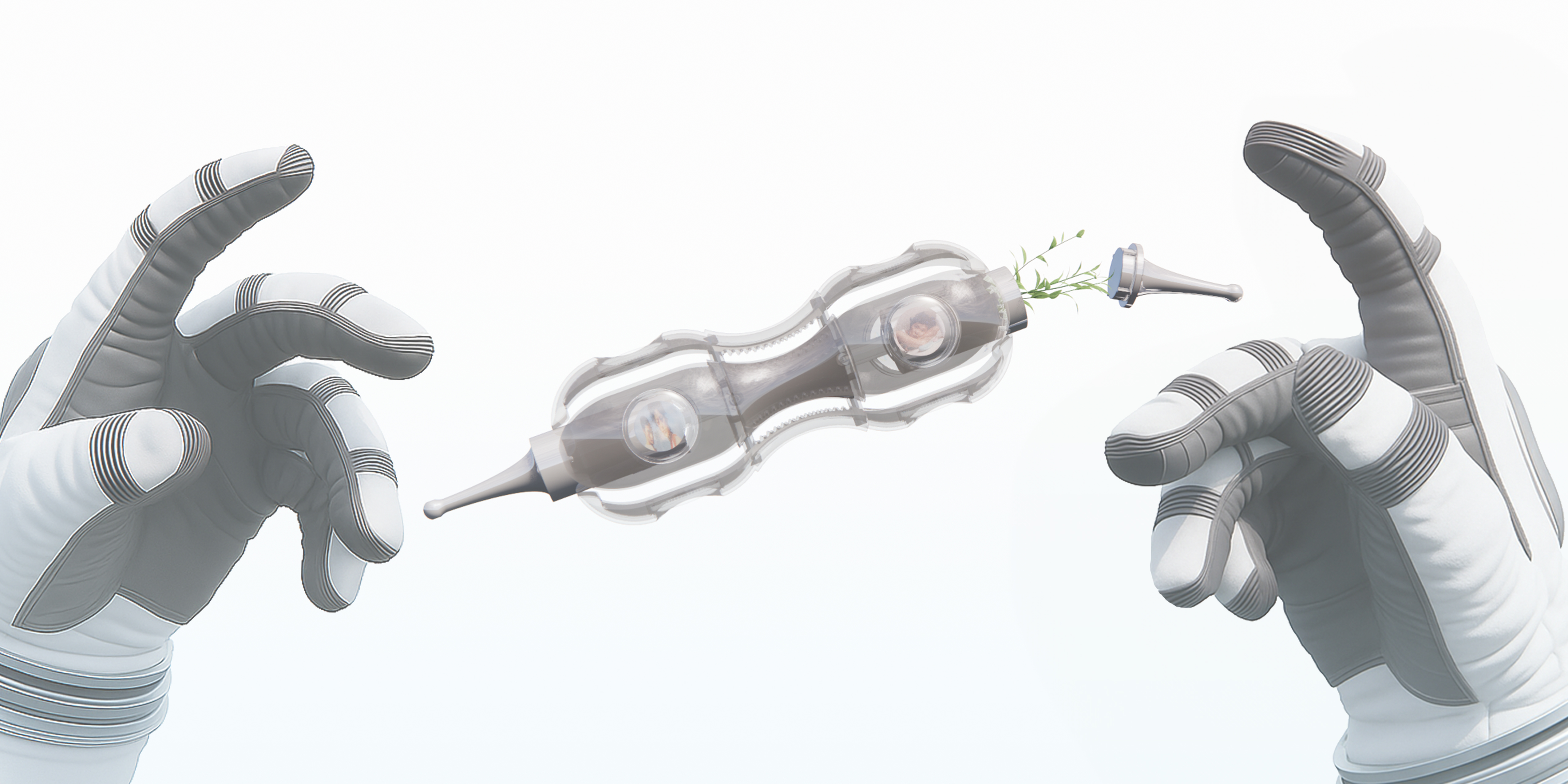


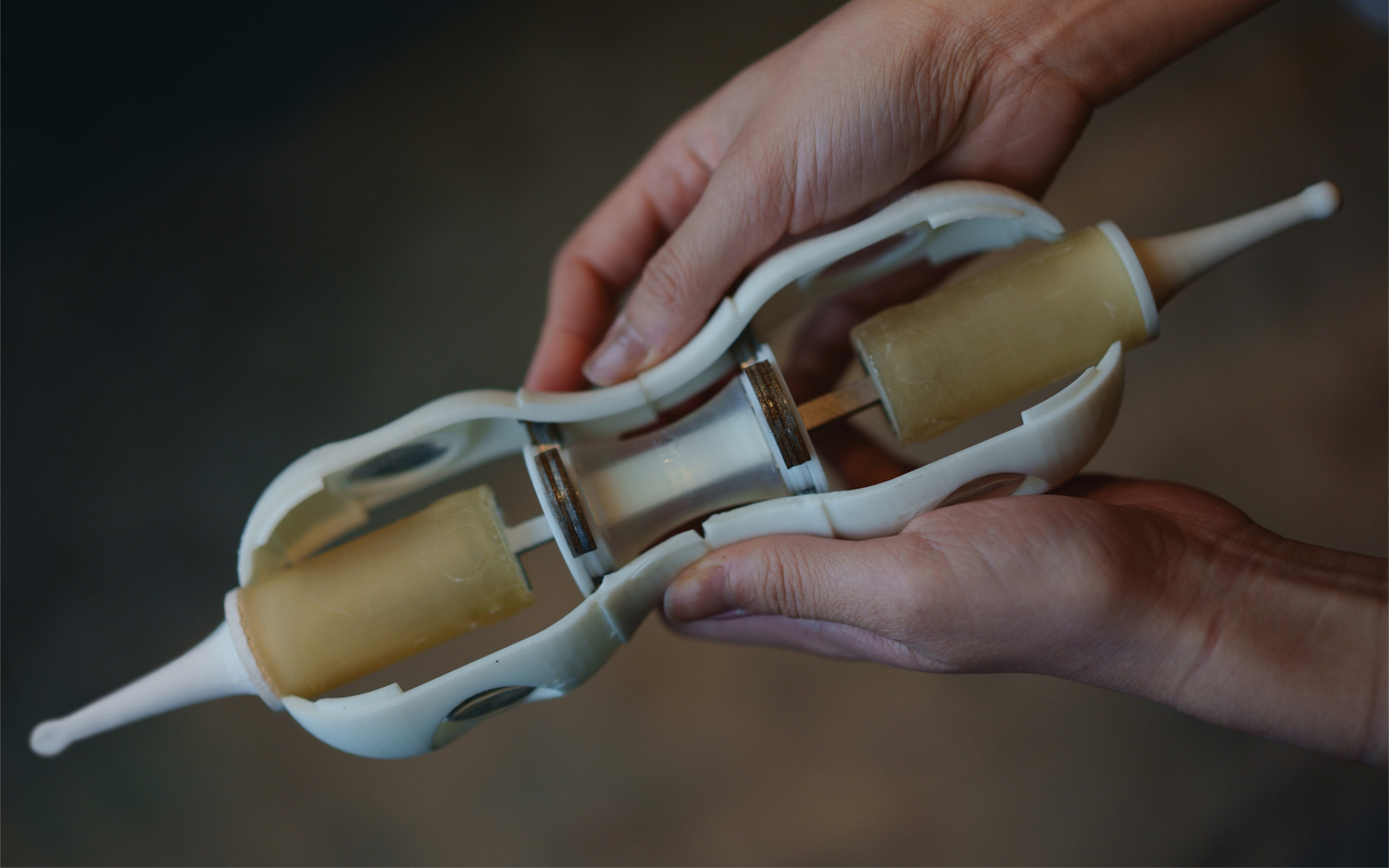

Human travelers venturing into zero- or reduced-gravity environments confront both the psychological dislocation of leaving Earth and the practical challenge of adaptation to new physical laws. How might memory, ritual, and personal experience endure beyond Earth? From this inquiry emerged the design of the Astronaut’s Amulet — a smooth titanium capsule, created by designer Aleksa Milojevic. Drawing inspiration from the locket—an object defined by its intimacy and protective nature—the amulet is conceived to exist in two distinct states: concealment and revelation. The amulet thus unites tool and talisman: a device engineered specifically for zero gravity, yet conceived as a cultural anchor—a reminder of humanity’s terrestrial cradle carried into the high frontier.
Design overview:
The amulet is a slender, hand-sized object—small enough to be grasped between the tips of the index finger and thumb and has three key features:
- Dual Internal Chambers – Two concealed chambers provide secure storage for essential or symbolic keepsakes.
- Optical Lens System Embedded on External Shells– Four magnifying lenses on the outer titanium shells reveal engraved imagery within the inner core, bringing hidden symbols into focus once unlocked.
- Zero-Gravity Locking Mechanism – A two-step interlocking system engineered to function intuitively only in microgravity, unlocking the access to the two features listed above.
The amulet’s design translates its poetic concept into a precisely choreographed sequence of motion. Each stage—closing, unlocking, opening, and reclosing—reveals the dialogue between engineering and symbolism that defines the object. What follows outlines the amulet’s mechanical transformation and the tactile experience it creates for its user.
Closed State:
In its resting position, the amulet’s outer shell elements are drawn inward by springs or magnetic attraction, enclosing the core and locking the internal chambers. The object remains sealed, smooth, and inert—its contents protected within.
Unlocking:
When the amulet is rotated by the user and released, centrifugal force pushes the shell elements outward, disengaging their interlocking edges and overcoming internal spring or magnetic tension. As it spins, the shell elements separate slightly along the central axis, clearing the path for the internal chambers to extend outward and lock into their open configuration.
Open State:
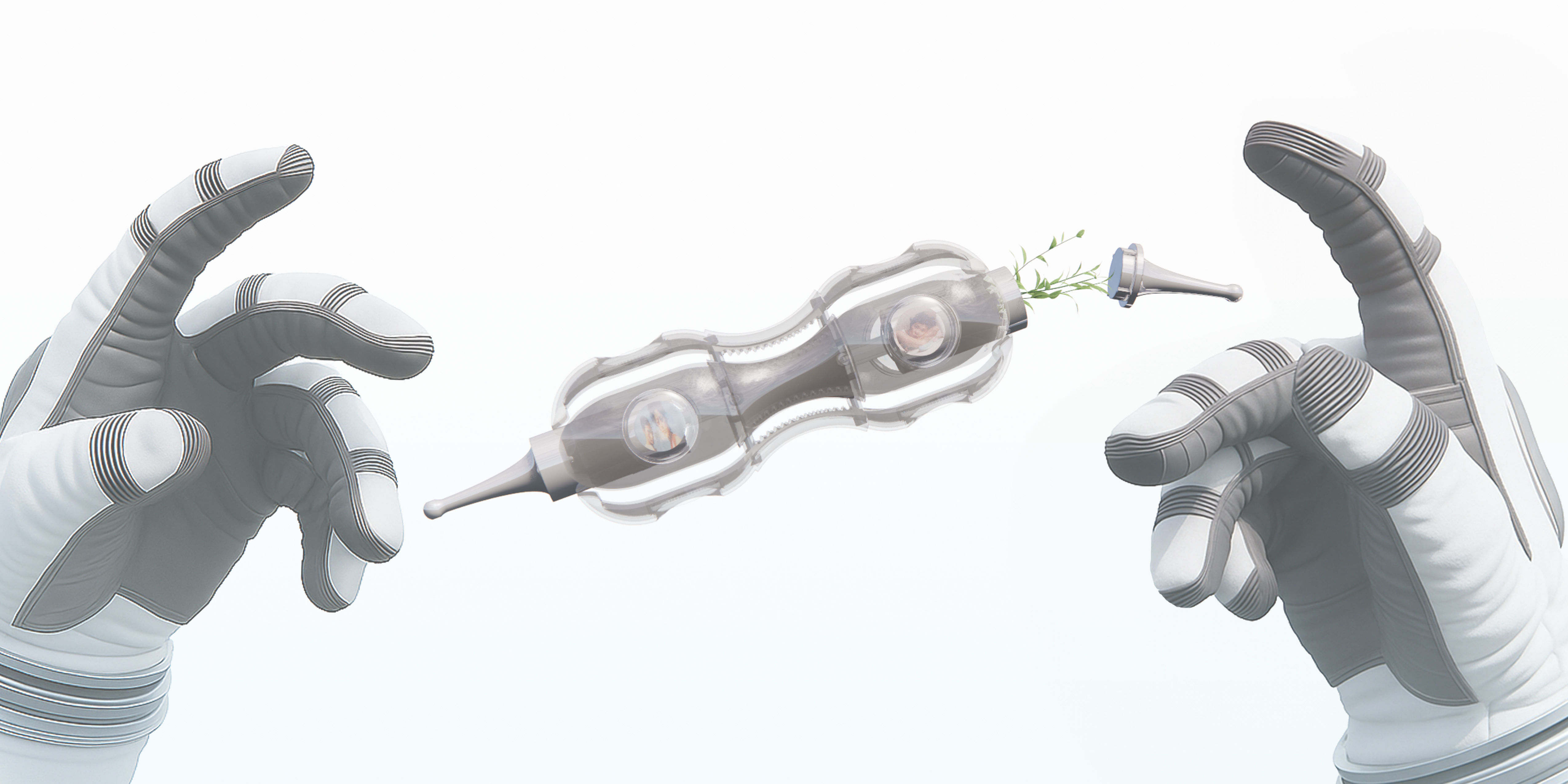
The amulet transforms from a sealed capsule into a miniature reliquary. Two spring-loaded chambers unfold from its core, each designed to hold small mementos. The owner can twist open each chamber to place or view what lies within—perhaps a folded note, a lock of hair, a pressed flower, or a fragment of cloth from home.
During this mechanical choreography, the outer titanium shells with embedded optical lenses align with the inner core. As the lenses settle into position, they magnify etched imagery on the inner surfaces—symbols, patterns, and fragments of memory—bringing hidden narratives into focus. Each amulet can be uniquely inscribed, transforming it into a vessel for personal meaning.
Reclosing:
To close, the user presses the two internal chambers inward, triggering the shells to retract and relock around the core. The mechanism resets, restoring the object’s original, sealed form and completing the cycle.

WHITE PAPER
A Locket for Memory in Microgravity by Amelia Gates
The Astronaut’s Amulet is designed as a smooth titanium capsule and draws inspiration from a locket mechanism; an object defined by its intimacy and protective nature. The amulet is conceived to exist in two distinct states: concealment and revelation. The amulet thus unites the tool and talisman: a device engineered specifically for zero gravity, yet conceived as a cultural anchor, a reminder of humanity’s terrestrial cradle carried into the high frontier.
Design Overview
The amulet is a slender, hand-sized object—small enough to be grasped between the tips of the index finger and thumb and has three key features:
- Dual Internal Chambers – Two concealed chambers provide secure storage for essential or symbolic keepsakes.
- Optical Lens System Embedded on External Shells– Four magnifying lenses on the outer titanium shells reveal engraved imagery within the inner core, bringing hidden symbols into focus once unlocked.
- Zero-Gravity Locking Mechanism – A two-step interlocking system engineered to function intuitively only in microgravity, unlocking the access to the two features listed above.
The amulet’s design translates its poetic concept into a precisely choreographed sequence of motion. Each stage—closing, unlocking, opening, and reclosing—reveals the dialogue between engineering and symbolism that defines the object. What follows outlines the amulet’s mechanical transformation and the tactile experience it creates for its user.
Closed State:
In its resting position, the amulet’s outer shell elements are drawn inward by springs or magnetic attraction, enclosing the core and locking the internal chambers. The object remains sealed, smooth, and inert—its contents protected within.
Unlocking:
When the amulet is rotated by the user and released, centrifugal force pushes the shell elements outward, disengaging their interlocking edges and overcoming internal spring or magnetic tension. As it spins, the shell elements separate slightly along the central axis, clearing the path for the internal chambers to extend outward and lock into their open configuration.
Open State:
The amulet transforms from a sealed capsule into a miniature reliquary. Two spring-loaded chambers unfold from its core, each designed to hold small mementos. The owner can twist open each chamber to place or view what lies within—perhaps a folded note, a lock of hair, a pressed flower, or a fragment of cloth from home.
During this mechanical choreography, the outer titanium shells with embedded optical lenses align with the inner core. As the lenses settle into position, they magnify etched imagery on the inner surfaces—symbols, patterns, and fragments of memory—bringing hidden narratives into focus. Each amulet can be uniquely inscribed, transforming it into a vessel for personal meaning.
Reclosing:
To close, the user presses the two internal chambers inward, triggering the shells to retract and relock around the core. The mechanism resets, restoring the object’s original, sealed form and completing the cycle.
Technical Specification
Beneath its poetic operation lies a foundation of exacting mechanical design. Each component—spring, magnet, hinge, and lens—functions within a calibrated spatial system that ensures stability in both gravity and weightlessness. The following technical specification details the amulet’s structural components and their interdependent roles in its transformation sequence:
- Housing: An elongated cylindrical housing with a top end and bottom end, defining a primary axis of rotation.
- Central Core: Positioned along the axis of rotation, serving as the anchor for shell and container mechanisms.
- Shell Elements: At least two (in this case four) interlocking shell elements, connected to the central core via radially extending springs or attracting magnets. The shells laterally enclose the core in the closed position, and can only open when all shells pull outward equally.
- Compartments: Two chambers connected to the core by springs parallel to the axis of rotation or repelling magnets. Each compartment features a protrusion extending toward either the top or bottom end.
- Apertures and Lenses: Shell elements may contain apertures housing magnifying lenses. These align with engraved or printed images on the compartments when extended.
Zero Gravity
On Earth, the amulet resists intuitive use: partial attempts to open it result in interlocking resistance. Only in weightlessness does the centrifugal unlocking behavior become evident, requiring the user to:
- Spin the object.
- Naturally release it into orbit.
- Recover it after the mechanism has engaged.
This creates an environment-specific ritual—effortless in space, cumbersome on Earth. To open it, one must release the object from their fingers’ grip as its compartments extend outward—an intuitive action in zero gravity. On Earth, unlocking it requires spinning and tossing it into the air before catching it again after it unlocks. The amulet thus becomes a riddle for the uninitiated, or a secret ritual for those who have returned from space and understand its gravity-bound intricacies.
In this way, the Astronaut’s Amulet unites mechanical precision with emotional resonance. It transforms remembrance into performance—a dialogue between body, machine, and environment that reveals its full character only when freed from gravity’s grasp.
Background and Motivation
The Astronaut’s Amulet draws inspiration from enduring human narratives of movement, migration, and belonging. Its conceptual foundation is rooted in the long history of crossing frontiers—through exploration, refuge, trade, and colonization—where objects and memories are carried from one place to another, preserving connection across distance and time. The central questions guiding the design were both practical and philosophical: What do we choose to carry when venturing into the unknown? How might design generate mythology in the context of exploration? To explore these questions, Milojevic examined both history and lived experience, tracing ceremonial objects displaced through conquest, keepsakes hidden during migration, and artifacts smuggled across borders in exile. These artifacts reveal a persistent, universal impulse: to preserve memory through tangible forms, to anchor identity in material objects, and to maintain continuity with the lives and worlds we leave behind, even as we step into new ones.
In conversations with individuals whose lives have spanned borders, the designers encountered objects of profound intimacy—soil stored in delicate vials, inherited tools worn by generations, musical instruments, and jewelry safeguarded across continents. Each object embodies a narrative, simultaneously practical and symbolic, demonstrating the ways humans find to carry meaning and memory in physical form, even under circumstances of displacement, upheaval, or uncertainty. The tactile qualities of these objects—their weight, texture, and capacity to be held or worn—suggest an intimacy that is impossible to replicate digitally.
This dialogue between the material and the mnemonic became especially poignant when considering space, a domain often imagined as cold, high-tech, and impersonal, populated by machines and instruments rather than intimate objects. The amulet responds to this environment by reintroducing tactility and personal resonance into a realm defined by precision and weightlessness. It proposes a method for carrying memory that is simultaneously functional and intimate: a small, hand-held capsule that echoes the historic care given to precious keepsakes and jewelry, while navigating the unique constraints of microgravity. Through this process, Milojevic asked: How can design preserve the deeply personal while meeting the technical demands of space? How can an object allow memory to be experienced, interacted with, and transported beyond familiar worlds?
From this synthesis of cultural continuity and technical necessity, the Astronaut’s Amulet emerged—a design in which symbolic resonance is embedded within mechanical function. It treats borders not merely as geopolitical or physical thresholds, but as spaces of transition between worlds: the known and the unknown, Earth and orbit, private memory and universal exploration. In doing so, it becomes an artifact that negotiates both human experience and the extraterrestrial, merging emotional weight with the weightlessness of space, and transforming the act of carrying memory into a gesture that exists uniquely beyond our planet.
Toward a Human-Centered Space Design
More than a feat of technical precision, The Astronaut’s Amulet represents a gesture toward the humanization of space design. By introducing sentiment into an environment defined by efficiency and survival, it redefines what it means to live beyond Earth.
For Milojevic, innovation is inseparable from empathy. The amulet embodies their belief that the future of space travel depends not only on engineering but on sustaining emotional continuity—rituals, memories, and the enduring human need to feel connected when far from home.
In this sense, the project stands at the intersection of culture and technology. It offers astronauts not merely a container for keepsakes, but a vessel for belonging—a physical reminder that even at the edge of exploration, meaning endures.
Ultimately, The Astronaut’s Amulet signals a shift in how we approach design for space: treating it not as a void to be conquered, but as a living context shaped by human presence. In its slow, deliberate rotation, the object captures a quiet truth—that wherever we go, we bring with us the impulse to remember, to protect, and to hold close what defines us.
Conclusion
From these studies, the amulet emerged as a synthesis of cultural continuity and technical necessity—embedding symbolic resonance within mechanical function. Today, The Astronaut’s Amulet exists as a working prototype with an international patent pending, published through WIPO. The work has been supported by the Yale Center for Collaborative Arts and Media, Yale Wright Laboratory, and Yale Ventures, enabling the project to evolve from speculative proposal to engineered object. Milojevic now leads a small team actively advancing The Astronaut’s Amulet toward a finalized, deployable product, while continuing to develop a series of uniquely designed objects for use in zero gravity.
Project Term: Mechanical Artifact course Spring 2022 Yale School of Architecture + CCAM
Instructors: Ariel Ekblaw + Dana Karwas
Course Design Team: Amelia Gates, Aleksa Milojevic, and Samantha
Lead Designer: Aleksa Milojevic
Aleksa Milojevic is a designer from Vienna, with experience in architecture, filmmaking, and set design - with an interest in languages, literature, and history. He conducted his Bachelor studies at TU Vienna, and his Master studies at Kazuyo Sejima’s masterclass at University of Applied Arts in Vienna, AHO in Oslo, and Tongji University in Shanghai, where he researched the history of rural life in PR China. Recently he has completed his postgraduate Master studies at Yale School of Architecture and now works as a designer in NYC.